

Introduction:
Understanding Custom vs. Off-the-Shelf Software

Choosing the right software solution is a critical business decision. Broadly, you have two options:
- Custom Software: Tailor-made applications built to fit your exact business needs
- Off-the-Shelf Software: Pre-built, commercial software designed for mass use
Think of it like this:
Custom software = a suit tailored just for you
Off-the-shelf software = a suit you buy off the rack
Each approach has its pros and cons, and the right choice depends on your:
- Budget
- Scalability requirements
- Integration needs
- Customization expectations
For Bangladeshi businesses — from fast-growing startups to established enterprises — this decision can significantly impact efficiency, innovation, and their competitive edge.
In this blog post, we’ll explore:
- Advantages & disadvantages of both types
- Key factors to consider
- Real-world examples to guide your decision
- How KuiperZ supports tailor-made software development
Custom Software:

Advantages of Custom Software
Opting for custom software development means building a solution from the ground up, tailored for your business.
| Benifit | Detailed | Impact of Business | Insight |
|---|---|---|---|
Tailored to Your Needs |
Custom software is built specifically for your business — not a one-size-fits-all model. It aligns with your unique workflows, roles, compliance standards, and operational logic—no unnecessary or irrelevant features. | Your team works more efficiently without having to adapt their processes to fit generic tools. Reduces learning curves and increases adoption rates. | A manufacturing firm in Chittagong can have an ERP system designed around its raw material tracking and production scheduling needs — no need to force-fit foreign templates or compromise on usability. |
High Flexibility & Scalability |
Pre-defined modules or vendor constraints do not limit you. The system evolves with your business, allowing you to add features, scale user access, integrate new technologies, and support expanding markets or customer bases. | Enables long-term growth without requiring the replacement or migration of systems every few years. Ideal for fast-growing startups and expanding enterprises. | A logistics company in Dhaka used KuiperZ to build a delivery management system that scaled seamlessly from city-level operations to nationwide real-time tracking — all within the same platform. |
Competitive Advantage |
With custom software, you can develop unique tools, interfaces, and automation strategies that match your brand’s vision and customer engagement style. These capabilities are proprietary — competitors can’t easily replicate them. | Differentiates your offering in the market, improves customer experience, and optimizes internal efficiency in ways off-the-shelf tools can't match. | An e-commerce startup in Bangladesh developed a localized checkout process with mobile payment integrations tailored for Bangladeshi users, giving them an edge over global platforms that lack regional customization. |
Ownership & Control |
You own the source code, intellectual property (IP), and complete control over updates, security policies, and data handling. Unlike SaaS platforms, there’s no dependency on third-party vendors for critical functionality or compliance decisions. | Greater autonomy in feature development, compliance alignment (e.g., with Bangladesh’s Digital Security Act), and data governance. Ensures continuity even if developers change. | A financial services firm built a secure internal risk assessment tool with KuiperZ — ensuring full ownership, compliance with local regulations, and the ability to modify or audit the system anytime without vendor restrictions. |
In highly regulated industries or public sector projects in Bangladesh, control and data governance are non-negotiable.
Disadvantages of Custom Software
While custom software offers numerous benefits, it also presents certain drawbacks and challenges that businesses must carefully consider before making a commitment.
Challenges of Custom Software Development (and How to Overcome Them)
| Challenge | Detailed | Impact of Business | How to Mitigate / Manage |
|---|---|---|---|
Higher Upfront Cost |
Custom software development requires a significant investment in planning, design, development, testing, and deployment. Costs depend on complexity, number of features, integration requirements, UI/UX design, backend infrastructure, and team expertise. | Budget constraints may delay or prevent the initiation of a project. However, unlike off-the-shelf tools, custom solutions are tailored to your business needs, potentially offering a higher ROI over time. |
- Plan your budget carefully - Prioritize must-have features first (MVP approach) - Consider hybrid models (e.g., using open-source frameworks + custom modules) - Treat it as a long-term investment rather than a one-time expense |
Longer Development Time |
Custom development can take from a few weeks to several months or even years for large-scale systems. Unlike SaaS platforms that offer instant access, custom software must be built from scratch, tested thoroughly, and deployed securely. | Delays can significantly impact time-to-market, particularly for startups or businesses launching new products/services under tight deadlines. |
- Use Agile methodology for iterative delivery - Break down the project into phases or sprints - Set realistic timelines and milestones - Focus on MVP (Minimum Viable Product) first to get early feedback |
Need for Clear Requirements |
Success hinges on clearly defined and well-documented requirements from the outset. Ambiguity or shifting priorities during development can lead to scope creep, missed deadlines, budget overruns, and misaligned expectations. | Poorly defined requirements often result in mismatched functionality, dissatisfied stakeholders, and costly rework. |
- Conduct thorough discovery workshops - Involve key stakeholders early - Document user stories and acceptance criteria - Use wireframes and prototypes for clarity - Maintain open communication channels between client and dev team |
Maintenance & Support Responsibility |
Once live, custom software requires ongoing maintenance: bug fixes, security patches, updates, performance tuning, and scalability adjustments. These tasks are often assigned to either the internal IT team or an external vendor, requiring additional budget and resources. | Without proper support, outdated software can become vulnerable, inefficient, or incompatible with newer technologies. |
- Include maintenance plans in your contract - Choose vendors who offer post-launch support - Build scalable architecture from the start - Automate monitoring and alerting systems - Allocate a dedicated budget for maintenance and enhancements |
Risk of Project Failure |
Common pitfalls include poor project management, unclear goals, technical debt, inadequate QA, or working with inexperienced teams. According to industry reports, up to 50% of software projects face delays, cost overruns, or outright failure. | Failed or delayed projects can damage credibility, waste resources, and disrupt business operations. |
- Partner with experienced, vetted vendors like KuiperZ - Adopt proven methodologies (Agile, Scrum, DevOps) - Define clear KPIs and success metrics upfront - Assign a dedicated project manager - Conduct regular code reviews and QA testing throughout the lifecycle - Have contingency plans and risk mitigation strategies in place |
In contrast, off-the-shelf tools come with pre-built customer support, managed security, and auto-updates baked into your subscription.
Risk of Project Failure or Delay
Custom software projects, especially poorly managed ones, are vulnerable to:
- Missed deadlines
- Quality or functionality gaps
- Technical bottlenecks
- Misalignment with stakeholder expectations
Choosing an inexperienced or unreliable development team can derail your entire project.
How to reduce this risk:
- Partner with trusted vendors like KuiperZ
- Use proven project management methodologies (like Agile/Scrum)
- Prioritize QA testing at every stage
Off-the-shelf Software:

Advantages of Off-the-Shelf Software
Off-the-shelf software refers to commercially available, ready-made solutions that can be purchased or licensed for immediate use.
Common examples include:
- Office productivity suites
- Accounting platforms (e.g., QuickBooks)
- CRM systems like Salesforce or Zoho CRM
These pre-built platforms offer a wide range of benefits for businesses that prioritize speed, affordability, and ease of adoption.
| Benifit | Detailed | Impact of Business | Insight |
|---|---|---|---|
Immediate Availability |
Off-the-shelf software can be deployed within minutes or hours. No need to wait for development cycles — simply download, install, or sign up and start using it right away. | Enables rapid response to business needs. Ideal for startups, growing SMBs, or urgent digital transformation projects. | A Dhaka-based startup needing a CRM can go live today using tools like HubSpot or Zoho — not months later. Ideal for time-sensitive operations, such as lead tracking or customer engagement. |
Lower Initial Cost |
These solutions are generally more affordable upfront compared to custom development. They’re often offered via monthly or annual subscriptions, or one-time license fees. This model reduces financial pressure at the initial stage. | Makes advanced tools accessible even for small businesses with tight budgets. Allows cost-effective scaling as the company grows. | While subscription costs may add up over time, they're predictable and avoid significant upfront investments. Especially useful for Bangladeshi SMEs looking to digitize their operations without draining their capital. |
Rich Feature Set & Best Practices |
Off-the-shelf software is built for broad use cases and includes comprehensive features across departments (e.g., sales, HR, finance). Designed based on industry best practices and tested by millions of users, leading to mature, stable performance. | Businesses get access to proven functionality that aligns with global standards — no need to reinvent the wheel. | An ERP system, such as Odoo or SAP, comes with pre-built modules for Sales, HR, Inventory, and Accounting. Even if you don’t use all features now, they’re ready when your business scales. |
Regular Updates & Vendor Support |
Reputable vendors regularly roll out updates, including new features, security patches, and UX improvements. Customer support is also available through helpdesks, FAQs, knowledge bases, and ticket systems. | Ensures long-term reliability, compliance, and protection against vulnerabilities. Reduces internal IT burden. | Tools like Zoho, Microsoft 365, or QuickBooks provide automatic cloud updates and have local support partners in Bangladesh, making troubleshooting easier and faster. |
Community & Learning Resources |
Popular off-the-shelf tools have vast user communities, tutorials, forums, and documentation. In Bangladesh, there is a growing number of local trainers, consultants, and service providers familiar with these platforms. | Easier onboarding, training, and troubleshooting for teams. Reduces dependency on in-house technical experts. | Platforms like WordPress, Slack, or Trello have thousands of free tutorials online. Local tech hubs in Dhaka and Chittagong offer workshops and consultancy services on widely used tools. |
Bonus: These available resources lower the learning curve and speed up employee onboarding.
Disadvantages of Off-the-Shelf Software
Despite their accessibility and convenience, off-the-shelf solutions are not always the perfect fit. Here are some limitations to be aware of when considering commercial software:
| Drawback | Detailed | Impact of Business | Insight |
|---|---|---|---|
May Not Fit Exact Needs |
Off-the-shelf tools are designed to serve a broad audience. They may not align with your unique workflows, industry-specific compliance requirements, or regional regulations (e.g., language, local laws and regulations). You may need to adapt your processes to fit the tool, rather than the other way around. | Reduced efficiency, user frustration, and workarounds that negate productivity gains. It can also lead to the underutilization of the software. | A global CRM might not support Bangla language or include fields required by Bangladesh’s tax or financial reporting standards. Outcome? Teams may skip using key features or manually enter data elsewhere. |
Limited Customization |
Most off-the-shelf solutions offer only surface-level customization, such as branding or UI tweaks. Deep customizations — such as modifying workflows or adding niche features — are often impossible due to a lack of access to source code or rigid system architecture. Some vendors charge extra for add-ons or integrations. | Delays can significantly impact time-to-market, particularly for startups or businesses launching new products/services under tight deadlines. | If your logistics company requires real-time integration with local delivery APIs or customs systems, but the software doesn’t support it, you’ll either build costly workarounds or settle for manual data entry. |
Ongoing Costs |
While initial costs seem low, subscription-based pricing can become expensive over time. With the addition of users, premium modules, storage, API usage, and support fees, the total cost of ownership (TCO) can surpass the price of a one-time custom solution in the long run. | Budget unpredictability and rising operational expenses, especially for growing teams or enterprises. | Example: At $50/user/month for 20 users = $12,000/year → $60,000 over 5 years. Add in feature upgrades or support fees, and this could easily exceed the cost of a custom-built system tailored to your exact needs. |
Vendor Dependency |
Your experience depends entirely on the vendor’s decisions. You’re at their mercy when they change pricing, discontinue features, suffer outages, or even shut down services. Support quality and responsiveness vary widely, and switching vendors can be complex and disruptive. | Loss of control, potential disruption, and risk of being locked into outdated or unsuitable systems. | Imagine relying on a cloud-based HRMS only to find out your vendor is discontinuing service in Bangladesh. Migration to another platform would mean retraining, data transfer, and possible downtime. |
Data & Integration Challenges |
Off-the-shelf software may not integrate smoothly with your existing tech stack — especially if you use legacy systems, homegrown tools, or region-specific platforms. This often leads to manual data handling, format mismatches, and inefficient workflows. Many vendors charge extra for API development or third-party integrations. | Increased operational complexity, higher error rates, and reduced automation benefits. | Trying to connect a foreign accounting SaaS with a locally developed inventory management system? Without native integrations, you may end up manually exporting and importing data, wasting time and increasing the risk of errors. |
Example: Your ready-made sales platform may not automatically sync with a custom-built inventory database — causing duplicate data or inaccurate reporting.
Some vendors offer built-in integrations or migration help — but these may require technical expertise or paid services.
Key Factors to Consider:
| Custom Software | Off-the-Shelf Software | |
|---|---|---|
Cost |
|

|
Scalability |
|
|
Integration |
|
|
Customization Cost |
|
|
Cost, Scalability, Integration, and Customization
Deciding between custom software and off-the-shelf solutions involves more than just budget considerations. The right choice depends on your business’s long-term goals, operations, and IT landscape.
Here are four critical factors to evaluate — along with practical comparisons to help guide your decision:
Bonus: These available resources lower the learning curve and speed up employee onboarding.
1. Cost
| Custom Software | Off-the-Shelf Software | |
|---|---|---|
Upfront Investment |
High – covers design, development, testing | Low–subscription or one-time license |
Ongoing Costs |
Lower in the long run (you own it) | Ongoing subscription costs add up |
Hidden Costs |
Maintenance, upgrades, developer support | Add-ons, extra users, premium support, required bundles |
Best For |
Long-term ROI-focused users | Businesses that need fast adoption with minimal startup cost |
Tip: Model a 3 to 5-year total cost of ownership (TCO) for both options before making a purchase decision.
2. Scalability
| Custom Software | Off-the-Shelf Software | |
|---|---|---|
Growth Handling |
Fully scalable – you control the architecture | Limited to what the vendor allows |
Upgrade Flexibility |
Add features/users as needed (with dev time) | Upgrade pricing plans for more users/resources |
Scalability Risks |
Requires planning + dev capacity | Risk of outgrowing the system |
Best For |
Companies with rapid scaling plans | Small to medium firms want built-in expansion paths |
Insight: Many businesses in Bangladesh start with off-the-shelf and eventually shift to custom once they hit tool limitations.
3. Integration
| Custom Software | Off-the-Shelf Software | |
|---|---|---|
Integration with Existing Systems |
Seamless — developers build specifically for your systems | Varies — only supports popular platforms |
Legacy System Compatibility |
Complete control to connect with old or unique systems | Limited – may require third-party tools if supported at all |
API/Plugin Flexibility |
Unlimited – code anything you need | Limited APIs or paid integrations only |
Best For |
Complex ecosystems with ERP, legacy, or homegrown systems | Simple business models using mainstream tools |
Evaluate what tools you’re already using and see how well your potential software choices integrate with them.
4. Customization Needs
| Custom Software | Off-the-Shelf Software | |
|---|---|---|
Process Fit |
100% tailored to your workflows and landscape | Must adapt to general/standard processes |
Feature Control |
Add anything you want | Limited to the vendor roadmap or available plugins |
Localization Support |
Easily support Bangla language, local regulations, etc. | May not support local market-specific needs |
Best For |
Unique industries, internal platforms, regulated sectors | Businesses in standard industries (retail, HR, finance, etc.) |
A tool that forces you to restructure core operations = red flag. Your software should serve your process, not the other way around.
Case Studies and Real-World Examples in Bangladesh

Bringing this decision into the local context can help clarify it. Below are two real-world examples of Bangladeshi businesses that faced the custom vs. off-the-shelf software decision — and how they approached it based on their needs and circumstances:
Case Study 1: Dhaka-Based Retail Chain Adopts a Custom Solution
Challenge:
A multi-outlet retail chain in Dhaka struggled to manage stock levels and real-time data across locations.
They initially used an off-the-shelf point-of-sale (POS) system, which worked for basic billing and inventory tasks.
Case Study: Custom Retail Management System by KuiperZ
| Category | Details |
|---|---|
Key Issues Faced |
- Inability to integrate with their e-commerce site - No Bangla language support in the interface - Reporting tools didn’t match internal formats |
Solution Implemented |
Partnered with KuiperZ to develop a custom retail management system tailored to their specific business needs and operational workflows |
Custom Software Features |
-Real-time syncingbetween web and physical stores -Fully functional Bangla-language UI -Custom reporting modulesaligned with internal formats -Employee-friendly workflowsfor inventory & sales tracking |
Measurable Impact |
-Reduced stock-out and overstock incidents -Improved operational visibility -Higher team adoptiondue to localized and intuitive UI -Significant ROI achieved within one yearthrough efficiency gains |
Insight: In cases requiring localization and system integration, custom software can unlock strategic benefits that go beyond what packaged tools offer.
Case Study 2: Small Manufacturing Business Chooses Off-the-Shelf Software
Challenge:
A small manufacturing company in Chattogram needed software to manage fundamental tasks, such as payroll, accounting, and light inventory management — but had a limited budget and simple requirements.
Solution:
They selected a well-known off-the-shelf accounting suite available in Bangladesh.
Case Summary: Successful Off-the-Shelf Software Adoption
| Aspect | Details |
|---|---|
Why It Worked |
-Affordable yearly subscription -Standard features included: Accounting, Payroll, Inventory -Ready to deploy: Up and running in just one day -Scalable via simple plan upgrades |
Trade-offs |
- Had to adapt internal processes to fit the system’s predefined structure - Covered about80% of functional needs -No deep customization required or pursued |
Measured Impact |
- Achievedquick digital transformation - Maintainedstable usage over 2+ years -Smooth scalingwith modest business growth -No major complicationsreported |
This format is perfect for:
- Internal reporting
- Client success stories
- Decision-making decks
- Comparative analysis (custom vs off-the-shelf)
Insight: For smaller businesses with standard needs, off-the-shelf tools provide a fast and cost-effective path to modernization.
Key Takeaway: Context Is Everything
These case studies reveal an important reality:
There’s no one-size-fits-all answer. The “right” choice depends on your business goals, budgets, workflow complexity, and long-term growth plans.
For Bangladeshi businesses, additional considerations include:
- Bangla language support
- Local payment or tax compliance features
- Integration with existing systems like local ERPs, SMS gateways, or mobile money platforms
- Cloud vs. local hosting preferences
In some cases, a hybrid approach works best:
Use off-the-shelf software for general needs and plug the gaps with lightweight custom modules.
How KuiperZ Provides Custom Software Solutions
If you determine that custom software is the right choice for your business, partnering with an experienced team is crucial to maximizing success.
KuiperZ is one of the leading software development companies in Bangladesh, specializing in custom software solutions tailored to businesses of all sizes and industries.
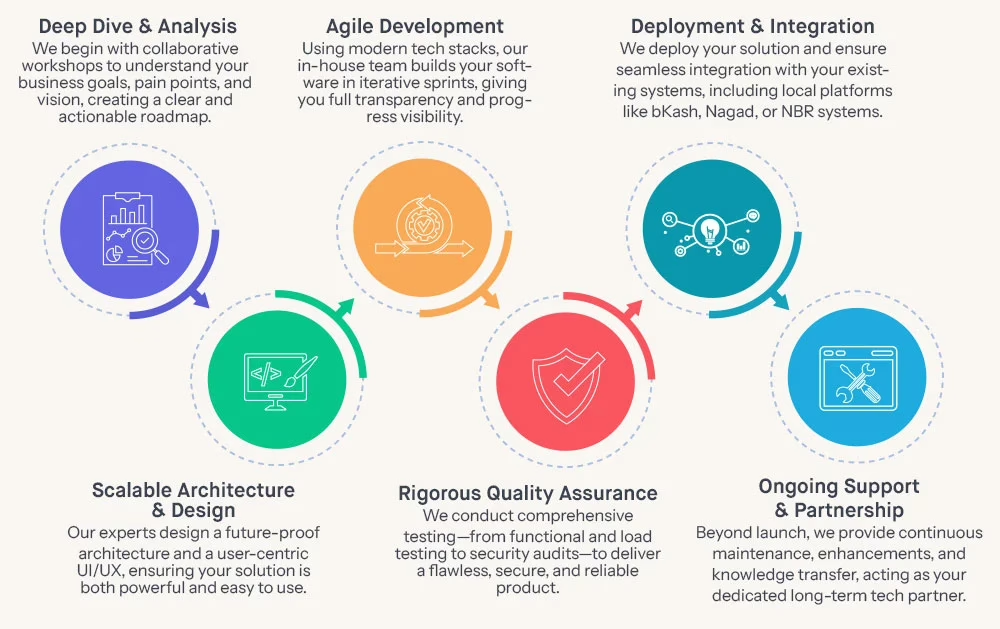
Here’s how KuiperZ can guide you through every stage of the custom development journey:
1. Consultative Approach
We begin by deeply understanding your business:
- Your business model
- Day-to-day operations
- Pain points and growth goals
Even if technical details aren’t clear to you yet, we convert your business objectives into a clear, actionable development roadmap.
What this means:
- Collaborative workshops & discovery sessions
- Requirement documentation & user flow planning
- Defined milestones and delivery expectations
The result: a project that starts strong, aligned with your real-world needs and future vision.
2. Expert Development Team
Our in-house, experienced engineers are skilled in:
- Web apps, mobile apps, enterprise systems
- Modern tech stacks (Node.js, Laravel, React, Flutter, .NET, AWS, etc.)
- Sector-specific best practices (e.g., retail, manufacturing, healthcare)
We use Agile methodology — so you’ll see weekly progress, provide feedback, and help shape the outcomes continuously.
What clients gain:
- Transparent development cycles
- High-code quality
- Clean UI/UX focused on usability
- Scalable backend systems
We don’t just “build and deliver” — we co-create outstanding software with you.
3. Built for Scalability & Seamless Integration
Every KuiperZ-developed application is designed for:
- Scalability → to accommodate future growth
- Ease of integration → with your existing tools and systems
We support:
- Modern APIs / Webhooks
- Data migration plans
- Legacy system bridging
- ERP, CRM, Payment Gateway compatibility
Example: If you’re running a local POS or legacy ERP, we can develop connectors so your new platform talks to your older systems without disruption.
4. Quality Assurance & Ongoing Support
We ensure every line of code is tested and optimized:
- Functional testing
- Load and stress testing
- Security auditing (critical for compliance and data safety)
Once you’re live:
- We run knowledge-transfer sessions so your team adapts quickly
- We provide on-call maintenance and future enhancements
- You gain a dedicated partner, not just a short-term vendor
If the software ever needs changes down the road, we’re right here.
5. Deep Understanding of Local Needs
Here’s where KuiperZ shines as a local + global hybrid:
- We know the Bangladeshi market — regulations, infrastructure, tech limitations
- Support for Bangla/English bilingual interfaces
- Local integrations (e.g., Bkash, Nagad, NBR systems, etc.)
- We align global standards with cultural and operational context
That means you get globally competent technology that works seamlessly for your local users.
What You Get When You Work With KuiperZ
- A fully aligned custom system built just for your specific workflows
- Deep collaboration, transparency, and hands-on support
- Scalable architecture ready for tomorrow
- A Bangladeshi team that understands your business environment
We’re not just coding. We’re partnering with you for long-term success.
Conclusion
Deciding between custom software and off-the-shelf solutions comes down to understanding your business’s:
- Specific needs
- Budget constraints
- Timeline expectations
- Long-term growth plans
There is no one-size-fits-all answer.
For some companies, a ready-made software package:
- Ticks ALL the boxes
- Provides a quick, cost-effective solution
- Works great with standard processes
But for others, investing in custom development can unlock:
- Greater workflow efficiency
- Tailored functionalities
- Future-proof scalability
- Competitive differentiation
Yes, the initial cost may be higher — but the resulting business impact often justifies it many times over.
Things to Reflect On:
Ask yourself:
- How well does this software align with our current operations?
- Will it grow with us tomorrow?
- Can we afford to bend our processes to fit the tool — or should the tool fit us?
- What will this decision cost over the next 3–5 years, in terms of both money and efficiency?
We hope this guide has shed light on each path and helped move you closer to an informed and confident software decision.
Ready to Take the Next Step?
Whether you’re:
- Leaning toward custom software,
- Still exploring your options,
- Or unsure what’s best for your business…
KuiperZ is here to help.
Why Choose KuiperZ?
- We understand the Bangladeshi business landscape
- We translate business needs into working software products
- We specialize in scalable, maintainable, custom solutions
- We offer honest, consultative advice — even if it means recommending an off-the-shelf product
Book a no-obligation consultation with our experts and let’s explore the path that’s right for you.
Contact Us Today
Let’s work together to build the perfect software solution — one that drives:
- Efficiency
- Growth
- Long-term success
Reach out to KuiperZ now: [email protected]
Or call us directly: (+880)1404 00 89 49
Or visit us: kuiperz.io/contact


